Passenger Rail for Commuters in Alaska
What is commuter rail? Commuter rail is regular train service from suburban and outlying areas to urban areas.
What would commuter rail look like in Alaska? Daily passenger rail service from the Mat-Su Valley to Anchorage with the opportunity to expand to other places around Alaska. Phase one would offer roundtrip service from the train station in Wasilla to the Downtown Anchorage and Ted Stevens Anchorage International Airport Train Depots. It would be operated by the Alaska Railroad and use existing track.
The Mat-Su Borough population is about 115,000 and is the fastest-growing area of the state. Anchorage is Alaska’s largest city and is home to one of the busiest airports in the world. That airport complex along with the university/hospital complex and military bases employ thousands of Alaskans who deserve better transportation options when commuting from outside of Anchorage.
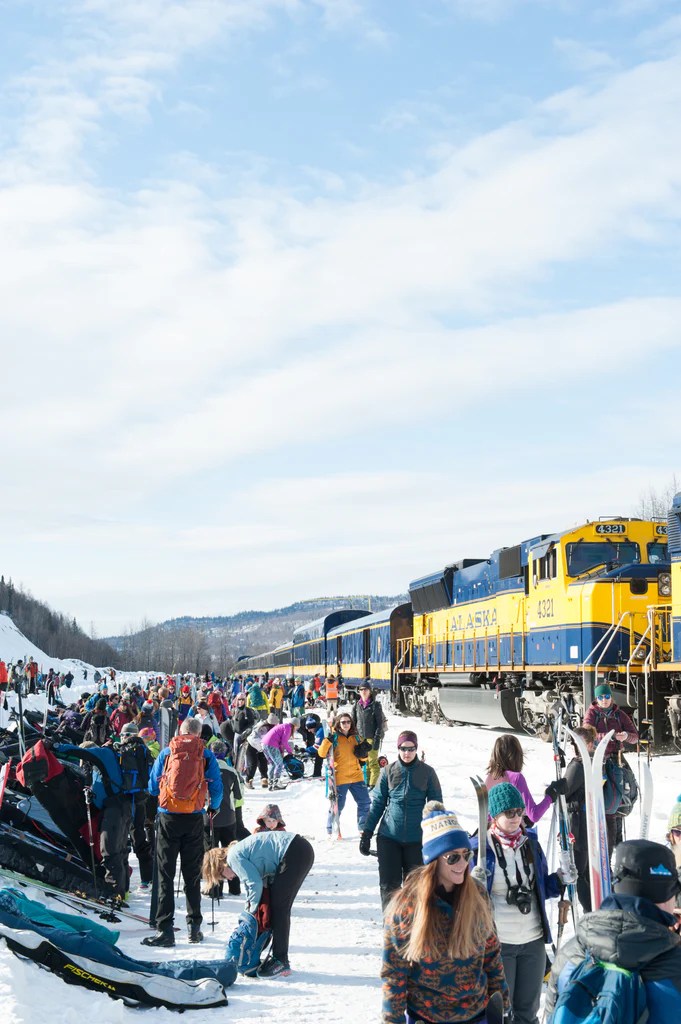

Do people want it? A 2009 commuter rail ridership forecast projected between 600 and 1600 riders per weekday in 2020. Those numbers would make a big impact as is but given significant population growth in the Mat-Su Valley since then, one could imagine that there would be many more riders.
How commuter rail can help tackle other challenges:
According to the Alaska Statewide Long-Range Transportation Plan and Freight Plan, called ‘Alaska Moves 2050‘, states “the 35 miles of the Glenn Highway between the Mat-Su Valley and Anchorage sees 33,000 vehicles daily with 2,000 trucks. There is no viable alternate route.”
The City of Wasilla released their Comprehensive Economic Development Strategy (CEDS), which states “isolation and supply chain disruptions are major threats due to the “one road in, one road out.”
There are shared goals between passenger and freight. Commuter rail service from the Mat-Su to Anchorage supports all four goals of the Freight Plan, including “1) Safety – Increase safety for all modes during the movement of freight, 2) Mobility and Access – Move goods safely, reliably, and cost-effectively across Alaska 3) Economic Vitality – Facilitate economic growth and lower the cost of goods and services 4) State of Good Repair – Keep what we have in a state of good repair.”
Are there comparable commuter rails? There are more than 30 commuter rail services in the United States; the WES Commuter Rail in Portland consists of 5 stations, covers 15 miles of track, and carries an average of 1,600 riders per weekday.
What are the benefits of commuter rail?
According to the National Commuter Rail Coalition:
- Commuter Rail is the safest form of transportation.
- Commuter Rail service supports economic development and grows a tax base by providing access to metropolitan centers.
- Commuter Rail facilitates the talent demands of employers through safe, environmentally sound transportation to jobs.
- Commuter Rail provides a city’s workforce with access to more affordable housing beyond the city center.
- Using Commuter Rail can prevent the adverse health effects attributable to driving in rush hour traffic.
- By removing cars from roadways, Commuter Railroads reduce the carbon footprint of riders, and spare remaining drivers even worse roadway congestion.
What is preventing it from happening? A combination of political will and funding. The Commuter Rail Advisory Task Force was rescinded in 2019 by Governor Dunleavy.
What are the potential funding opportunities? https://akfederalfunding.org/infrastructure/transportation/
What are the key resources?

Matsu – Anchorage Commuter Rail in Numbers
1979
first commuter rail study
33,000
vehicles on Glenn Highway from Matsu to Anchorage every day
1,600
maximum projected riders per weekday (in 2009)
$8.2M
estimated funding for pilot program (in 2018)
 Alaska Commuter Rail Coalition